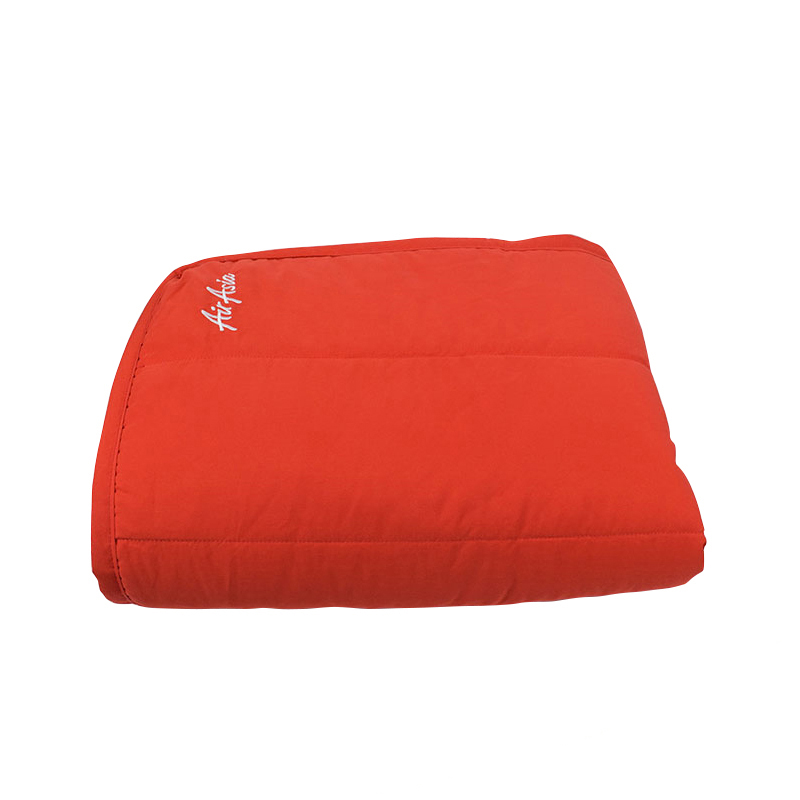
The "inflight blanket" in airplane cabins isn't provided out of sudden airline kindness, but is directly related to cabin environment, human physiology, and safety and comfort standards.
1. High-altitude temperatures are low.
During cruising, the outside temperature is approximately -40°C to -50°C. Although the cabin is air-conditioned, the aircraft's insulation is limited, and strong convection at high altitudes makes the cabin feel cooler than on the ground—especially noticeable on night flights.
2.At cruising altitude, the air is thin and feels colder.
The cabin is typically pressurized to about 2,400 meters above sea level, where oxygen levels are lower than at ground level. This slightly slows down metabolism and reduces peripheral circulation, making hands and feet more prone to feeling cold. A blanket can help reduce heat loss.
3.Passengers sitting for long periods without moving
Remaining seated for hours without activity reduces muscle heat production, making the elderly, children, women, and those with weaker constitutions more prone to feeling cold. The inflight blanket is a low-cost way to improve comfort.
4.Air conditioning airflow direction issue
Overhead air conditioners may directly blow on the head, neck, shoulders, and back. Many people worry about catching a cold or developing a stiff neck; covering with the inflight blanket or throw can help block the airflow.
5.Sleep and Rest Needs
Long-haul or red-eye flights should allow passengers to sleep; providing the inflight blankets and inflight pillows enhances rest quality, reduces fatigue, and helps minimize discomfort such as motion sickness and irritability.
6.Safety and Emergency Considerations
In the event of diversions, delays, loss of cabin air conditioning, or rapid decompression leading to temperature drop, the inflight blankets can serve as temporary insulation to prevent passengers from suffering from hypothermia.
7.Industry Service Standards
International airlines have long included inflight blankets, inflight pillows, and headphones as standard cabin amenities. Low-cost carriers on short-haul routes often switch to a "pay-per-use" or "on-demand" model, but traditional airlines still keep a certain number of these items onboard.
Simply put: High-altitude cold + limited movement + perceived chill + need for sleep + unexpected temperature drops = blankets become a standard in aircraft cabins.
If you're interested, I can also share some lesser-known facts—like why so many inflight blankets are deep blue or burgundy, and why they’re often thin and not very warm.
https://www.tiktok.com/@medylinh/video/7684551599171128583?is_from_webapp=1&sender_device=pc&web_id=7671587155651659277
https://www.tiktok.com/@medylinh/video/7684562072209788168?is_from_webapp=1&sender_device=pc&web_id=7671587155651659277