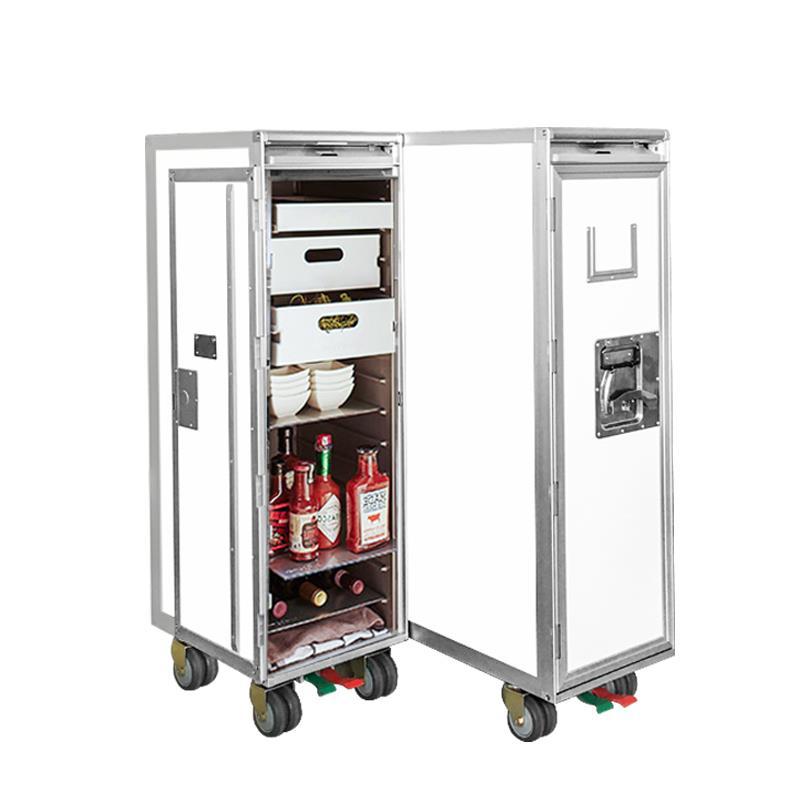
The invention of atlas trolley is a crucial step in improving the efficiency of airlines’ catering services, which is closely related to the evolution of aircraft cabin layout and the operational needs of flight attendants. With the gradual reduction of seat spacing in airplanes, the traditional way of preparing meals in the kitchen and delivering them to passengers has become inefficient and difficult to maintain food temperature. The emergence of food trucks has solved this problem, allowing flight attendants to distribute meals directly in the cabin through the aisle, avoiding back and forth travel while maintaining the appropriate temperature of food.
The internal design of atlas trolley in the early days mainly relied on simple insulation structures, but modern dining cars are equipped with heating and cooling systems, interlocking boxes and other equipment to meet the demand for batch heating of meat and vegetables in high-altitude environments. These technological improvements ensure the stable quality of meals in limited spaces.
The popularity of dining cars has promoted the standardization of aviation catering, especially on international routes, as it has become a fundamental tool for providing a consistent dining experience, laying the foundation for the diversified development of in-flight catering services in the future.
The atlas trolley only has 2 standard sizes as below:
81*30.5*103cm
40.5*30.5*103cm
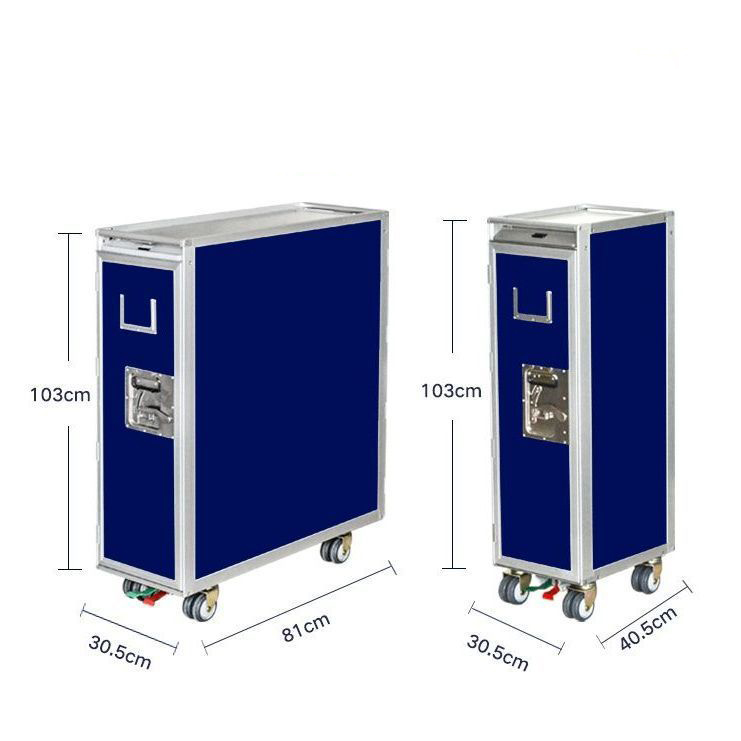
A full-size atlas trolley can be equipped with 14 drawers or 28 trays
A half sized atlas trolley can be equipped with 7 drawers or 14 trays
Airlines will match drawers and trays according to different needs.